
Search for your machine

23255 Available ads

Search by type of processing

Do you have a machine to sell? Publish your ad now

Macchinari industriali
Loading...
Loading...

Our partners

Let’s talk about ...

AMB 2026: Collaborative Processes Drive Automation

Central topic: Automation: Patrick Schwarzkopf (VDMA) discusses collaborative processes, artificial intelligence, and automation for SMEs using no-code solutions. As manufacturing companies strive to make their processes more efficient and flexible, automation solutions play a key role, especially in areas where people and machines are increasingly collaborating. AMB 2026 addresses this key topic with a practical approach and demonstrates how collaborative processes are evolving across the entire metal cutting process chain. In this interview, Patrick Schwarzkopf, Director General of the VDMA Robotics and Automation Association, analyzes the key factors driving this evolution and provides an overview of the developments companies should keep an eye on. Automation as one of the three central themes: Collaborative processes are gaining increasing importance AMB : The robotics and automation industry is forecasting a 5% decline in revenue by 2026; nevertheless, pressure on manufacturing companies to automate their processes continues to grow. Why is now the right time to focus on collaborative processes, and what factors are driving companies to take this step? Patrick Schwarzkopf : It's true, we're still observing a marked caution in investments, due to several reasons: from geopolitical tensions to the well-known challenges related to the competitiveness of production sites. However, the trend toward automation remains unchanged. Demographic change will become even more evident in the coming years; this will make it necessary to automate an increasing number of activities to support the remaining qualified personnel. Only in this way can we remain competitive. The interaction between humans and machines will be crucial. The extremely rapid development of artificial intelligence (AI), particularly generative AI and so-called physical AI, opens up new possibilities, for example through agent AI (Agentic AI) and through the much simpler use and programming of automation solutions. AMB : For a long time, automation was primarily designed for large-scale production. Today, however, robotic solutions are a viable option even for small series. How far has this evolution come, and what does a small business actually need to introduce automation into its production process? Patrick Schwarzkopf : Automation for SMEs is making enormous strides. Technological developments in recent years have been extraordinary and have significantly reduced the barriers to entry for small and medium-sized enterprises. Typical scenarios are "low volume, high mix," characterized by low production volumes and a high degree of product diversity. In these contexts, it is crucial that programming can be performed quickly, easily, and without significant staff effort. Numerous no-code solutions exist today for this purpose, requiring no programming knowledge. Automation workflows can be configured via graphical interfaces with drag-and-drop functionality, while robot trajectories can be taught through manual guidance (hand-guiding) and memorized at the push of a button. Major manufacturers have long been offering solutions specifically designed to meet the needs of SMEs. Pragmatic configurations, such as a robot working overnight, are often sufficient, thus enabling a significant increase in productivity. The obstacle is often less technological than cultural: many companies continue to believe that automation is inevitably too complex or too expensive. This belief is now obsolete, because solutions already exist and are easily observed at specialized trade shows like AMB. A useful reference point, for example, is Go4Robotics, the online platform of the International Federation of Robotics (IFR). AMB : As programming and operation become easier, direct collaboration between humans and robots is also becoming increasingly practical. Today, the two increasingly work side by side, without the need for protective barriers: it was precisely the development of AI-supported sensor systems that made this approach truly feasible. What concrete changes does all this mean for the shop floor, and how should companies rethink processes and the role of people? Patrick Schwarzkopf : Collaborative robots (cobots) are now well established. In many applications, however, the term "coexistence" is more accurately used: humans and robots operate without barriers, enabling direct and safe interaction. We are now seeing a further level of even closer collaboration with humanoid robotics. AI is making extraordinary progress in this area: robots are increasingly capable of interpreting their surroundings and acting autonomously and appropriately. Although significant pioneering work is still needed, humanoid robots are gradually emerging from research laboratories and are already finding their first experimental applications in industrial settings. It will still be some time before this technology reaches full maturity for widespread use. At the same time, however, humanoid robotics is accelerating the evolution of close human-machine interaction, for example through the ability to communicate verbally with robots. AMB : Many of these developments are best appreciated by observing them live. In September, AMB will bring together the entire metalworking ecosystem in Stuttgart: manufacturers, users, and researchers under one roof. What contribution can this unique combination make to the wider adoption of collaborative automation? And why is a visit to the trade fair essential for all metalworking companies considering the introduction of automation solutions? Patrick Schwarzkopf : A look at the data clearly highlights its significance: according to the International Federation of Robotics (IFR), machine tending—the automatic loading and unloading of workpieces on machine tools—is one of the main applications of robotics. Over the past decade, new annual installations of robots for handling tasks on machine tools have increased from 14,500 in 2015 to 19,000 in 2024. Preliminary data from the IFR indicate that the trend will continue with significant, double-digit growth in 2025. The use of collaborative robots (cobots) has also increased significantly in recent years: in 2024, approximately 65,000 cobots were installed worldwide, representing 12% of all industrial robots. The most significant increases are being seen in mobile robotics, which enables the flexibly connecting different production machines, for example through mobile manipulators, i.e., mobile platforms equipped with a robotic arm. It's hard to find such a comprehensive, focused, and industry-specific overview as that offered by a specialized trade fair. At AMB, you can see and experience firsthand the automation solutions for metalworking by chip removal. AMB : Thank you for the interview, Mr. Schwarzkopf. Focus on automation at AMB 2026 in the Oskar-Lapp-Halle (Hall 6) Automation will be a key focus at AMB 2026 in nearly every exhibition hall: from machine tool manufacturers with automation systems to solutions for tools and clamping technology, such as automatic setup. A special highlight will be the Oskar-Lapp-Halle (Hall 6), which will house the "Automation and Handling Technologies" area. Numerous exhibiting companies—including FANUC, KUKA, Cellro, RoboJob, Wassermann Technologie, and many others—will present their latest solutions for production and process management. It's worth checking out the exhibitor list, as here, trade visitors can experience firsthand how robotics, collaborative automation, Industry 4.0 approaches, and the IIoT (Industrial Internet of Things) are evolving metal-cutting processes, introducing new solutions and driving innovation in the industry. About AMB Since 1982, AMB has presented the highlights of the international metalworking industry. "Where Metal Comes Alive" will once again be a fixture on the industry's agenda in 2026, this year from September 15 to 19. It is the international marketplace and meeting place for metalworking, showcasing the latest products, technologies, innovations, services, and concepts in all their facets. AMB is supported by the VDMA Präzisionswerkzeuge (Precision Tools), VDMA Software and Digitalization (Software and Digitalization), and the VDW Verein Deutscher Werkzeugmaschinenfabriken e.V. (German Machine Tool Builders' Association).

09/07/2026
For info: AMB 2026

UCIMU Assembly: in 2026 the Italian machine tool, robot and automation manufacturing industry is expected to experience a timid recovery

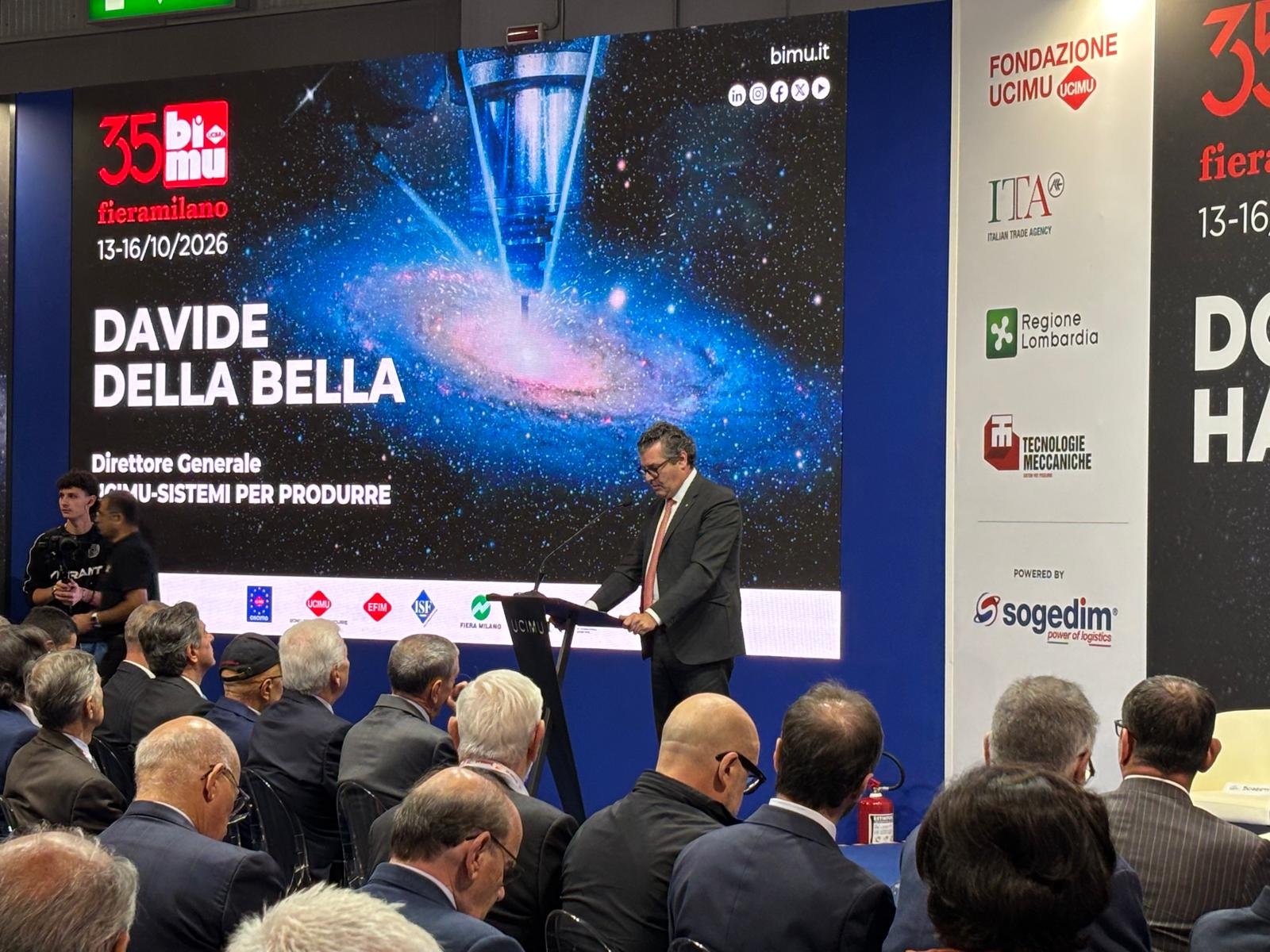
2025 proved to be a generally weak year for the Italian machine tool, robot, and automation manufacturing industry, with production essentially stagnating compared to the previous year. This disappointing result was driven by the sharp decline in exports. Domestic market activity fared better, driven by the recovery in demand, but despite double-digit increases, figures were still far from 2021-2022 levels. Despite this, the Italian industry in the sector confirmed its position, once again, as a major player on the international scene, ranking fifth in the world for production and consumption and fourth in exports. Forecasts for 2026 predict a modest recovery driven by improved collection performance on the domestic market, thanks in part to the availability of the Hyper-Depreciation program. Activity abroad remains weak. This, in short, is the framework outlined by Riccardo Rosa, President of UCIMU-SISTEMI PER PRODURRE, during the Shareholders' Meeting. The meeting was attended by Barbara Cimmino, Vice President of CONFINDUSTRIA for Exports and Investment Attraction, and Paolo Magri, President of the ISPI Scientific Committee. Both were moderated and interviewed by Rita Querzè, a journalist for Il Corriere della Sera. This was followed by a discussion between two young entrepreneurs, Luca Dadone and Elisa Stucchi, who shared their vision for innovation, using AI and augmented reality applied to the manufacturing world. Over 150 guests attended, including entrepreneurs and managers from the sector, institutional representatives, and journalists. THE 2025 FINANCIAL STATEMENTS According to the final data processed by the UCIMU Study & Business Culture Center, in 2025, Italian production of machine tools, robots, and automation systems reached 6,391 million euros, up 1% compared to 2024. Exports saw a significant decline, dropping 12% to €3,760 million. The export-to-production ratio fell to 58.8%, compared to 67.5% in 2024. In 2025, the main outlet markets for Italian offerings were: United States (572 million, -9%), Germany (274 million, -24.9%), France (204 million, +0.2%), Poland (188 million, +11.2%), Turkey (168 million, -11.5%), India (164 million, -11.6%), Mexico (158 million, -10%), Spain (147 million, -6.5%), China (110 million, -54.1%), Brazil (84 million, +15.9%). After two years of decline, Italian manufacturers' domestic deliveries returned to growth, reaching €2,631 million, up 28.1% from the previous year. This performance was driven by the recovery in domestic consumption, which rose 22.3% to €4,534 million. Imports stood at 1,903 million euros, up 15.1% compared to 2024. The share of domestic consumption covered by foreign supplies fell by three percentage points to 42%. Production capacity utilization declined, with the annual average falling from 77.3% in 2024 to 76.5%. The same trend was observed for the order book, which stood at 6.3 months of guaranteed production, compared to 6.5 months in 2024. The sector's turnover stopped at 9,330 million euros. THE 2026 FORECASTS According to forecasts developed by the UCIMU Study & Business Culture Center, 2026 will see a slight recovery in the Italian machine tool, robot, and automation manufacturing industry. All indicators will return to positive territory, but increases will still be limited. Production will reach €6.64 billion (+3.9%). Exports will remain at the previous year's level, reaching €3.785 billion (+0.7%). The positive trend in domestic deliveries by manufacturers will continue, expected to grow by 8.5% to €2,855 million, driven by Italian demand, which is expected to reach €4,870 million (+7.4%). Imports will also show a positive trend, reaching 2,015 million (+5.9%). THE ITALIAN MACHINE TOOL INDUSTRY BETWEEN GEOPOLITICAL INSTABILITY AND INCENTIVES Riccardo Rosa, president of UCIMU-SISTEMI PER PRODURRE, stated: "2025 was an overall disappointing year for Italian machine tool manufacturers, who had to contend primarily with a sharp decline in export sales. On the other hand, despite the recovery, domestic market activity was also unsatisfactory, partly due to the chaos surrounding Transition 5.0." "On the international front, geopolitical instability has made the activity of the sector represented by UCIMU particularly complicated, as foreign markets are the main outlet for its production." "That said, the events of recent years have subjected our businesses to a continuous stress test, training them to operate in unprecedented business conditions. For this reason too, " continued Riccardo Rosa, " we note that not everything that happens, directly connected to our world, impacts our business in the same way." DUTIES "The tariffs introduced by the Trump administration have had a manageable impact for us. The data shows it: in 2025 ," stated Riccardo Rosa, " sales in the United States are expected to drop by 9%. But the US remains, by far, the primary market for Made in Italy products in this sector. This is possible for several reasons: first, the United States does not have sufficient local production to cover domestic consumption and requires advanced, highly customized technology; furthermore, at this particular moment in history, the defense sector, a strategic sector for the country and therefore exempt from paying duties, is experiencing fairly buoyant demand. These three factors have allowed, and continue to allow, Italian manufacturers to continue operating in the American market, which has always appreciated the characteristics of our offering." "This doesn't mean ," the president added, " that the critical issues have been eliminated. For the types of machinery also produced by American manufacturers, the tariff is clearly a heavy burden that has limited sales of Made in Italy products in this sector. But that's not all. Trump's trade policy has had some significant indirect effects; for example, the increased cost of some raw materials applied by other countries in response to the tariffs, an increase that also impacts our business." EUROPE AND THE AUTOMOTIVE INDUSTRY "Managing the impact of wars and the weakness of a key market like Europe has proven more complicated. In the case of wars, the most obvious example for us manufacturers is the disappearance of Russia from our radar. In 2013, before the invasion of Crimea and the first sanctions, it was our fourth-largest export market, with €177 million in exports. In 2022, it was our eighth-largest destination market (with €99 million). Since 2023, it has been absent and, more importantly, it is a market we have given away to Chinese manufacturers. Who knows if, once this wound at the heart of Europe is healed, we will be able to recover at least some of the lost ground." "And speaking of Europe ," stated Riccardo Rosa, " we are dangerously approaching the risk of deindustrialization. The absolutely questionable decisions made by EU authorities regarding the electric automotive transition are increasingly showing their concrete effects. At a time when the younger generations' concept of transportation is profoundly changing, with the car no longer considered a status symbol but a means of travel, European government bodies, with their dirigiste attitude, have effectively allowed Asian offerings to invade spaces previously reserved for our manufacturing sector. Before the effects become irreversible, we ask those who represent and govern us in Europe to rethink their approach, which must be based on the principle of technological neutrality, thus allowing the automotive supply chain, and its entire extensive supply chain, to properly manage the ongoing transition not only with respect for the environment but also, where possible, safeguarding the jobs of those employed in the industry." "Aside from the car to which it is so closely tied, Germany, the sick man of Europe, may be seeing the light at the end of the tunnel. In the first quarter of 2026, the machine tool orders index, compiled by the German association, rose 15.1%, breaking a negative trend that had lasted three consecutive years. The recovery plan promoted by Chancellor Mertz and the defense support plan are restoring confidence in the country. Let's hope this is indeed the case, because if the German locomotive restarts, we, the first carriage of this train, are ready to hook up to it and continue working in the Made in Germany production chains, which travel along very long routes, distributing our production everywhere in the world." THE HORMUZ CRISIS "While we await the terms of the agreement and are aware that it will take time for freight transit to resume its normal pace, the impact on our business is currently manageable, and we are confident that the easing of tensions in the Middle East will bring significant benefits to our companies. In terms of direct business, the region accounts for approximately 30% of exports to Asia, so a return to "normalcy" will boost our business in the region, where metal forming technologies are in particular in demand in response to major infrastructure development plans. Indirectly, the resumption of freight transit will allow for a gradual reduction in procurement costs, which have risen sharply in recent months." THE ITALIAN MARKET AND INCENTIVES "In a crucial moment like the one we are experiencing, with decidedly weak foreign demand, the domestic market becomes even more important for our companies. The availability of the Hyper-Depreciation measure provided for by the new Transition Plan 5.0, now fully operational, is an excellent tool to support Italian demand for new machine tools." We must say that 2026 had started off on a really challenging note: domestic order intake had dropped significantly, 29% compared to the January-March 2025 period. However, the feeling was that demand had stalled. In this first month of Hyper-Depreciation, with the GSE Platform now operational, we've already seen a shift in attitude among our Italian customers. This confirms what we've been saying for some time: Italian demand is there, but customers were waiting for clarity before they could place their orders. The incentive is now working. On the sidelines of the Mechanics Roundtable convened by the Ministry of Business and Made in Italy at the end of June, it emerged that 90% of the total resource reservation requests entered into the platform were for investments in machine tools. Good news! MIMIT deserves recognition for having developed, albeit belatedly, an easy-to-use, three-year measure. Finally, Italian companies have an industrial policy measure that allows for medium-term planning for both producers and investors. The hope is that its use will allow Italian demand to return to the high levels of 2021-2022, thus also ensuring the proper updating of our industry, which requires continuous innovation to remain competitive in the international market, where digital technology and AI are redrawing the rules of the game.

09/07/2026
For info: Ucimu

JIMTOF 2026

From October 26 to 31, the 33rd edition of JIMTOF, an international exhibition dedicated to the machine tool sector and considered one of the world's leading international technology fairs, will take place at Tokyo Big Sight. Covering an area of ​​118,540 square meters, there will be 944 exhibitors at a total of 4,423 booths, including 725 Japanese and 219 international, organized by product category. The exhibitor list is published online on the official website www.jimtof.org. The previous 2024 edition attracted 162,670 visitors. Manufacturing professionals, by registering in September on the trade fair website, will be able to experience firsthand and gather information on the most innovative technologies, from machine tools to accessories. JIMTOF 2026 will feature metal cutting and forming machine tools, machine tool accessories, cutting and wear-resistant tools, diamond and CBN tools, grinding wheels and abrasives, gears and gearing devices, hydraulic, pneumatic, and hydraulic machinery, precision measuring machines and instruments, optical measuring instruments, testing machines, and CAD/CAM. JIMTOF has been a highly popular event that has been held every two years for over fifty years, a well-established trade fair renowned for its ability to provide visitors with information on a wide range of products used in the manufacturing industry. by Marinella Croci

06/07/2026
For info: Jimtof 2026

Valvitalia Group wins $30 million contract for US Desert Southwest gas pipeline

The order strengthens the order backlog, which has risen to €263 million. GOVERNANCE: GROUP'S CORPORATE BODIES RENEWED FOR THE NEXT THREE-YEAR PERIOD The supply concerns 94 large diameter valves that will be manufactured in the Rivanazzano Terme plant and that will be used for a new 840 km infrastructure that will connect Texas to New Mexico and Arizona. President Salvatore Ruggeri: "This award confirms our ability to participate in major international energy infrastructure programs and leverages the industrial know-how developed in Italy." Executive Vice President Massimiliano Ruggeri: "The Americas are an increasingly central market for the Group and offer interesting prospects for further growth in the medium to long term." The Valvitalia Group announces that it has been awarded a new contract valued at approximately $30 million for the supply of valves for the Desert Southwest project, one of the most significant energy infrastructure projects currently under development in the Southwest United States. The order concerns the production of 94 48-inch valves, which will be entirely designed and manufactured at the Rivanazzano Terme (PV) industrial site, confirming the central role of Made in Italy and the Group's technological expertise in the creation of highly complex solutions for major international energy projects. Delivery of the supply is scheduled for 2027. The order acquisition contributes to the growth of the Group's order book, which has risen to approximately €263 million, and further strengthens Valvitalia's positioning in the Americas, currently the Group's primary destination market. Overall, orders from North and South America account for over 37% of total bookings, confirming the continent's strategic importance for business development. To support its commitment in the region, the Group can also count on the presence of Valvitalia USA staff in Houston, Texas. Led by Massimiliano Ruggeri, the organization ensures stable coverage of the American market and supports Valvitalia's development efforts in a region of primary global importance. Salvatore Ruggeri , President of Valvitalia, commented: "Winning this important contract confirms the trust our clients place in the expertise, reliability, and quality of the solutions we design and implement. Participating in a strategic infrastructure project like Desert Southwest means making a concrete contribution to the energy development of a rapidly growing area and, at the same time, confirms our ability to successfully participate in major international infrastructure programs. This result enhances the wealth of expertise we have built over the years and the crucial contribution of our people. The quality of our order backlog allows us to look confidently to future growth prospects and confirms the validity of our path, supported by an increasingly qualified presence in energy markets with the greatest potential." Massimiliano Ruggeri , Executive Vice President of Valvitalia, stated: "This award is an important recognition of the work we've done over the years to consolidate our presence in the Americas and strengthen relationships with leading energy sector operators. The US continues to be a key market for Valvitalia and offers exciting development opportunities, supported by significant investments in energy infrastructure. At the same time, we are continuing our growth in South America, where we see favorable prospects for business expansion. The quality of the opportunities and ongoing dialogue with leading clients allow us to confidently look forward to the evolution of our presence in the region." Desert Southwest The US infrastructure, estimated at $5.6 billion, will extend for approximately 840 kilometers, connecting the Permian Basin, one of North America's most important hydrocarbon fields located between West Texas and New Mexico, to end-use markets in the southwestern United States, particularly Arizona and New Mexico. The pipeline's construction will meet the region's growing energy demand, supporting population growth and regional economic development. Dedicated Gas Pipeline Furthermore, among the most recent and significant opportunities in South America, there is the supply of valves for the Gasoducto Dedicado project in Argentina, a 480-kilometer gas pipeline under construction in the Province of Neuquén. The leadership of the group has been confirmed for the next three years. Valvitalia's Shareholders' Meeting and Board of Directors also renewed the Group's governing bodies for the three-year period 2026-2028, confirming the continuity of the governance that has accompanied the development and growth path of recent years. Salvatore Ruggeri was confirmed as President, Massimiliano Ruggeri as Executive Vice President, and Andrea Forzi as Chief Executive Officer. The new Board of Directors also includes Manuela Carra, Angela Colmellere, Paolo Rinaldi, and Manuela Sabbatini. Franco Gianni and Andrea Alghisi will also participate in the Board of Directors' meetings as observers. At the same time, the new Board of Statutory Auditors was appointed, composed of Micol Marisa as President, Annalisa Zanini and Giuseppe Galeano as effective Auditors. The renewal of these positions ensures strategic and managerial continuity for the Group at a time marked by a growing international presence and significant development opportunities in its key markets.

02/07/2026
For info: Gruppo Valvitalia

AI in manufacturing: from pilot to practical application

Artificial intelligence as a central theme at AMB 2026 // Guido Reimann, VDMA, discusses opportunities, challenges and current developments At AMB, the international trade fair for metalworking, taking place in Stuttgart from September 15 to 19, 2026, Artificial Intelligence (AI) will be one of the three main topics, alongside automation and the circular economy. We discussed the progress made by the industry and the useful insights decision makers can draw from AMB 2026 with Guido Reimann. He is Deputy General Manager of VDMA Software and Digitalization and Coordinator of the VDMA Competence Network on Artificial Intelligence. AMB: AI was a hotly debated topic at AMB 2024. Where does the metalworking industry stand today, in 2026? Has AI become a standard practice, or are pilot projects still prevalent? Guido Reimann: For the mechanical and plant engineering sector in general, as well as for manufacturers of precision tools and machine tools, the topic of artificial intelligence has gained further importance. A VDMA survey in spring 2026 revealed that over 80% of mechanical engineering companies attach great importance to artificial intelligence technologies. Around a third of companies are already using AI solutions in production. This means the era of pilot projects is over. We are seeing increasing practical application of AI. Furthermore, many pilot projects continue to be conducted within companies to further familiarize themselves with the technology and test new application possibilities. Current business application areas related to manufacturing focus on software development, engineering and design, business management, IT, marketing, and communications. Artificial intelligence solutions are also increasingly being used in sales and product-related services for customers in the mechanical engineering industry. To fully leverage their potential, companies must focus on their digitalization and promote it strategically. AMB: The mechanical and plant engineering sector expects a tangible increase in efficiency thanks to AI. What specific figures and success stories do you know in the metalworking industry? And what are the main obstacles to implementation? Guido Reimann: AI-based solutions and approaches not only promise increased efficiency, they also ensure it along the entire value chain. This is reflected, for example, in the reduction of costs for producing technical documentation and user manuals, in the time and cost savings in purchasing by increasing the number of identical components and thus improving purchasing conditions, or in the reduction of unplanned downtime, for example on machine tools, where cost savings of 10 to 20% are possible. Furthermore, AI solutions can significantly accelerate processes in many areas: development, production, sales, and customer service. Comprehensive and sustainable digitalization is a fundamental prerequisite for the use of artificial intelligence and other digital technologies. However, obstacles often include change management, slow implementation, and a lack of human resources. Projects often fail less due to technical issues than to organizational difficulties, inadequate decision-making structures, poor engagement, insufficient knowledge of applications and limitations, and other non-technical factors. And even in the case of AI, it's true that not all pilot projects are successful. The crucial factor is knowing when to stop and redirect limited resources towards more effective digitalization activities. AMB: Which AI technologies and application areas do you believe will dominate AMB 2026, and why is participation in AMB 2026 essential for metalworking professionals interested in AI? Guido Reimann: In traditional product development and design, as well as in software development, we are now seeing numerous AI-based solutions offered by the software industry. At the same time, many mechanical engineering companies have integrated AI technologies into their related products or services, making them available for metalworking. At AMB, industry professionals will find not only manufacturers and suppliers of production machinery, but also software and service providers that support seamless implementation along the entire value chain. AMB: Industrial AI, the European AI Regulation, humanoid robotics, quantum computing: the agenda is getting busier. What developments should decision makers in the metalworking industry definitely keep an eye on over the next five years? Guido Reimann : It's true that the range of technologies, applications, and regulatory requirements relevant to the digital sector is constantly expanding. This also means that equipment manufacturers and application industries must keep pace with this change. Digital technologies are not only becoming increasingly important for internal business processes, but are also significantly influencing companies' business models. Those who are new to new digital technologies and their potential applications within their own company and in their customers' industries can lay the foundation for future success well in advance. A VDMA survey from spring 2026 also shows that mechanical engineering companies are focusing intensively on the following three technologies and intend to expand their use: artificial intelligence, digital twins, and open source software. AMB: Thank you for the interview, Mr. Reimann. Artificial Intelligence at the heart of the program For those who want to delve deeper into the topic of AI at AMB 2026, not only by visiting the exhibition stands but also by interacting directly with experts, the AMB Stage offers two special opportunities on Wednesday, September 16: From 12:00 to 1:30 p.m., VDMA Software und Digitalisierung invites you to a panel discussion entitled "Artificial Intelligence in Production - Practical Examples." This will be followed at 2:00 p.m. by the presentation "AI in Production - From Impact to Added Value," featuring industry, research, and application professionals who will discuss current developments, concrete application examples, and open questions related to the use of AI in mechanical processing. The AMB Stage is located in the atrium (EO010) at the east entrance. About AMB Since 1982, AMB has presented the highlights of the international metalworking industry. "Where metal comes alive" will also be a regular event on the industry's agenda in 2026, this year from September 15 to 19. It is the international marketplace and meeting place for metal cutting, showcasing the latest products, technologies, innovations, services, and concepts in all their facets. AMB is supported by the VDMA Precision Tools, VDMA Software and Digitalization, and the VDW Verein Deutscher Werkzeugmaschinenfabriken e.V. (German Machine Tool Builders' Association). Further information is available at www.amb-messe.de/

18/06/2026
For info: AMB 2026

Machine tools: Economic recovery remains fragile due to persistent structural pressures

CECIMO examined the challenges the sector will face in 2026 and discussed future risks and opportunities, in a context still characterized by political and economic uncertainty. Economic situation and prospects In 2025, the European machine tool sector continued to face a challenging economic environment, with weak demand and increased global competition putting pressure on CECIMO member companies. European machine tool production is estimated to have decreased by approximately 6.6% compared to 2024, reaching €23.5 billion, demonstrating that the slowdown has yet to ease. This trend is also impacting Europe's position in the global market. In 2025, Europe's share of global machine tool production fell to approximately 30.8%, almost 2 percentage points less than the previous year. This trend is particularly worrying when compared to 2023, when Europe accounted for 33.4% of global production. This means that Europe has lost almost 3 percentage points of global production share in just two years, indicating a gradual erosion of its "industrial position." Furthermore, the European machine tool market showed clear signs of weakening when considering consumption levels, which decreased by 3.7% compared to 2024, reflecting lower demand across European countries. Trade flows also declined: exports by European machine tool manufacturers decreased by 8.8%, while imports fell by 4.2%. The main export destinations for European machine tool manufacturers (excluding Europe) are the United States, China, and India. At the same time, when looking at European machine tool import flows, Japan, China, and South Korea continue to be the most significant suppliers. Overall, these developments confirm that the sector has been operating in a challenging economic environment, impacted by slowing investment, persistent uncertainty, geopolitical tensions, and weakening momentum in both European and global markets. Taken together, these factors have reduced demand for machine tools and negatively impacted the operating conditions of CECIMO members. A similar picture emerges when looking at the order levels of the CECIMO8* index. Domestic orders decreased by approximately 1.7% in 2025 compared to 2024, marking the third consecutive year of contraction. By contrast, foreign orders increased by 1.2% over the same period, marking the first year of growth after two consecutive years of decline. CECIMO's projections for 2026 indicate a modest improvement after two consecutive years of declining production and consumption in the European machine tool sector. Consumption and production levels are expected to increase in European countries, suggesting a possible stabilization. CECIMO's estimates for orders indicate an improvement in overall order volumes in the CECIMO8 index countries in 2026. However, this outlook remains fragile and exposed to external shocks and general market conditions and should therefore be interpreted as a transition phase rather than a full recovery. The sector will continue to operate in a highly uncertain environment, characterized by geopolitical tensions and conflicts, trade risks, potential tariff measures, energy market volatility, and weak investment dynamics in major European economies. Since European machine tool manufacturers remain highly exposed to international trade and industrial investment cycles, any deterioration in these conditions could limit the expected recovery and potential future recoveries. At the same time, CECIMO sees potential support from positive spillover effects related to public investment and strategic sectors such as defense, aerospace, electrification, artificial intelligence technologies, and advanced engineering. These sectors could help support demand for advanced and high-precision manufacturing solutions, but their impact will depend on timely implementation and avoiding further delays. A stable trade environment, increased industrial investment, and effective policy measures could mark the beginning of a gradual recovery for the European machine tool sector. Without these conditions, Europe risks further weakening its position in machine tool technologies, while global competitors continue to strengthen their industrial capabilities. "The current situation confirms that Europe cannot take its industrial leadership for granted. European machine tool manufacturers continue to operate in a challenging environment, characterized by declining demand, persistent global uncertainty, and growing competitive pressure. While some opportunities may emerge in strategic sectors, Europe needs a stable policy framework, increased industrial investment, and faster implementation of measures to support advanced manufacturing," commented François Duval, President of CECIMO.

16/06/2026
For info: Cecimo

Still: Update of the EXV 14-20 and EXP 14-20 forklifts and the EXH 14 and EXH-S 20-25 pallet trucks

STILL, a leading supplier of intralogistics systems and equipment, continues to expand its portfolio to maximize customer benefits by updating four models, in line with its commitment to developing perfectly adapted and highly efficient warehouse equipment for every application. Optimized functions, technologies, and safety features, combined with the latest innovations, further improve the trucks' suitability, safety, and efficiency. This allows warehouses to be organized even more efficiently in terms of space, time, and costs, helping companies meet the demanding and dynamic requirements of intelligent warehouse organization. With the upgrade of the EXV 14-20 and EXP 14-20 stackers and the EXH 14 and EXH-S 20-25 pallet trucks , STILL continues to optimize and expand its portfolio of warehouse technology. The newly launched trucks will make it even easier for companies to find the most suitable, efficient, sustainable and cost-effective solution for each application. “The sector is characterized by great dynamism. Requirements and applications often change rapidly and radically, requiring a high degree of flexibility and adaptability from companies,” explains Marco Fornara, Head of Sales & Marketing Support at STILL Italia. “For us, as a manufacturer, this means continuously developing and optimizing our solutions and trucks so that we can always offer customers the best and most personalized solution to their needs. In addition to hardware adaptations, rapidly evolving technologies also play a key role in this process.” Last year, STILL expanded its range of warehouse trucks by updating the EXV 10C–16C and EXD 18C–20C stackers and the EXH-L 16–20 pallet truck, laying the foundation for its customer-oriented portfolio dedicated to intelligent warehouse organisation. Horizontal transport and loading/unloading of trucks made easy: the STILL EXH-S 20-25 and EXH 14 pallet trucks Hot on the heels of the launch of the AXL iGo, the first automated solution for loading and unloading trucks, STILL is also introducing the EXH-S 20-25 and EXH 14 electric pallet trucks, featuring new functions and innovative improvements. The latest version of the EXH-S 20-25 pallet truck with fixed platform has a load capacity of up to 2,500 kg and a top speed of 14 km/h. It provides reliable support for demanding tasks and long transport distances. The innovative STILL tiller with integrated display responds to customers' preference for controlling the truck using the familiar tiller. The SafetyLight integrated into the chassis, the optional platform suspension in the Plus version, and the intelligent foot sensor also ensure greater safety and comfort. The latter can be configured to move only when the operator's feet are within the truck's contours, or to only allow low-speed mode when a foot is detected by the sensor. To ensure optimal utilization of the truck throughout its entire life cycle, the EXH-S 20-25 can be easily integrated into the STILL Smart Portal fleet management system. For lighter applications and short distances, the new EXH 14 pedestrian pallet truck is the ideal choice. This extremely maneuverable truck effortlessly moves loads up to 1,400 kg in horizontal transport and can be easily operated even in the tightest spaces, even with the tiller fully extended. Its compact dimensions also make it a particularly flexible warehouse assistant: not only can it maneuver precisely inside a truck, but it can also be transported in the cargo area. Quick and safe storage, even in confined spaces: the STILL EXV 14-20 and EXP 14-20 forklifts The newly improved EXV 14-20 and EXP 14-20 pedestrian stackers make loading and unloading in narrow aisles and high racks more flexible and efficient, ensuring ergonomics and safety even over long distances. Both models are equipped with a powerful, low-maintenance engine and offer a load capacity of up to 2,000 kg. The extra-long, ergonomic, and responsive STILL tiller with OptiSpeed ​​takes safety to a new level: it always maintains a safe distance between the operator's feet and the truck and automatically adjusts speed based on the tiller's inclination. Combined with the Curve Speed ​​Control assistance system, the tiller ensures an optimal balance between maximum travel speed and safety when cornering, in narrow aisles, and during starting and braking. The EXV 14-20 is designed for particularly agile maneuvering in confined spaces, with stacking heights of up to 6 meters, while the EXP 14-20 is the ideal choice for maximum flexibility. Adjustable cantilever forks allow for easy handling of a wide variety of load units, as well as the convenient use of additional attachments via optional hydraulic functions. All forklifts can also be supplied with lithium-ion batteries, which ensure high operational availability and flexible charging, even while working. Customers thus receive a forklift perfectly tailored to their needs and requirements, while also benefiting from a cutting-edge energy system that effectively combines availability, efficiency, and sustainability.


Full control over the reconditioning process, thanks to the new digital portal

With a new update, Sandvik Coromant now offers an end-to-end experience for tool reconditioning Metal cutting specialist and leading manufacturing solutions provider Sandvik Coromant has updated its solid carbide reconditioning service. To give manufacturers full visibility into the reconditioning process, this update, which replaces the previous multi-step, manual workflow, offers an integrated online experience that dramatically reduces quote and lead times. Historically, customers requiring tool reconditioning had to rely on communication between sales teams, distribution centers, and designated hubs. Receiving a quote could take several days before the actual reconditioning could begin. Recognizing the need for a faster and more transparent process, Sandvik Coromant decided to simplify the customer journey by removing unnecessary steps from the service. A new online portal transforms the process: now, customers simply register, enter the tool code and quantity of tools to be reconditioned, and receive an instant quote. This allows them to make immediate decisions and have a complete overview of the entire process. Furthermore, for most markets, Sandvik Coromant covers all shipping costs, taxes, and customs duties associated with the service, ensuring a simple and seamless end-to-end experience. On the platform, users can select their preferred packaging (either supplied by Sandvik Coromant or their own), add any notes to the order, and submit the request. Once an order is placed, it can of course be tracked. The portal shows which of Sandvik Coromant's global remanufacturing hubs the tools will be sent to and provides direct contact information for the responsible team. Completed orders and remanufacturing history data are automatically stored, providing complete transparency to support ongoing production planning. Customers can also easily track the number of tool remanufacturing operations, allowing for better inventory planning. "The goal is to achieve a consistent and reliable lead time of 21 days from order receipt," says Matthew Johnson, Product Manager – Reconditioning at Sandvik Coromant. "Customers will enjoy all the benefits of full process visibility, faster lead times, and complete confidence in the value of reconditioning. Our goal is to give them back control, while striving to meet the highest reconditioning standards." Customers can choose to recondition their tools as often as they wish, as long as their quality meets their needs. "While we guarantee that the tools can be reconditioned up to three times and maintain 100% of their original performance, we know they can be reconditioned many more times and still deliver exceptional performance," Johnson continues. Typically, reconditioning a tool at least three times saves 50% compared to purchasing new tools. This service is combined with Sandvik Coromant's tool recycling program, which is dedicated to tools that have reached the end of their useful life. This combination of an intuitive and transparent reconditioning service and a proven buyback program allows manufacturers to maximize the value of their equipment and move closer to achieving their sustainability goals. Sandvik Coromant Together with customers and partners, Sandvik Coromant paves the way to a sustainable future and provides tooling solutions to mechanical engineering industries worldwide. Over eighty years of practical experience have allowed us to build a wealth of knowledge in metal cutting and machining. This expertise transforms every challenge into an opportunity for innovation, collaboration, and cutting-edge solutions. Our goal is to pursue positive change by promoting sustainability, efficiency, and growth to shape a future where innovation is at the forefront. Part of the global industrial engineering group Sandvik, Sandvik Coromant is committed to building the future, together with its customers. For more information, visit www.sandvik.coromant.com or follow us on social media.


Launch of ER HP collet chucks: a new standard for high-speed milling

Designed for high-speed milling and 5-axis machining, Seco® has improved its range of ER HP collet chucks. Thanks to a rigid and finely balanced design, the ER HP ensures smoother finishes, longer tool life, and unprecedented reliability. The new ER HP collet chuck was designed to meet the challenges of modern machining, where tool slippage, vibration, and unreliable clamping can cause costly machine downtime and material waste. With excellent run-out accuracy and a robust, symmetrical design, the ER HP ensures consistent results, reduced tooling costs, and faster cycle times. High clamping force and a secure grip ensure process reliability even in the most demanding operations, while the intuitive roller wrench system makes installation quick, safe, and accessible to all operators. Effortless implementation The ER HP collet chuck is quick, safe, and straightforward to install. Unlike complex tool holder systems that require specialized training or risky setups, the ER HP uses a simple roller wrench for assembly, allowing for quick tool changes and minimizing downtime. " Our HP ER collet chuck is designed to give manufacturers the confidence to push their processes further without compromising precision and reliability. By combining fine balance, high clamping force, and ease of implementation, we help our customers achieve more consistent finishes, longer tool life, and greater sustainability in their operations ," said Yves Heitz, Global Product Manager Machine Solutions. Headquartered in Fagersta, Sweden, and present in over 75 countries, Seco Tools is a multinational company that provides metal removal machining solutions for milling, turning, holemaking, and tooling systems. For nearly 100 years, Seco has been committed to excellence throughout the entire manufacturing process, ensuring high-precision machining and high-quality results.

22/06/2026
For info: Seco Tools

CoreX ONE: Imagine being able to see inside your parts. Measure inside and out in seconds. Identify porosity and defects before they reach the customer.

CoreX ONE is an industrial tomograph designed for the shop floor. It measures internal and external dimensions in a single run. It automatically detects porosity, blowholes, and internal defects. It compares the scanned volume with the CAD model via a color map. It does this in about 40 seconds. It's the ideal tool for production start-up and batch changeovers: a quick check at the start of a shift ensures that critical measurements are within the correct range before the line restarts. But it's also fast enough for final piece-by-piece validation or for incoming checks on purchased components. Compact, self-shielded, it can be installed directly in production. No dedicated infrastructure required. FAST. SIMPLE. ACCESSIBLE. The 2,400W rotating anode source – the same technology as hospital medical tomographs – distributes heat onto a rotating disk: superior power, no annual maintenance on the filament. The software is designed for line operators. The results of each measurement are displayed in a traffic light format. The dimensions are displayed in a two-dimensional section—the same logic as a profile projector. A physical button starts the cycle. The report is automatically generated. The return on investment is rapid. No specialized operators. No shielded rooms. Low operating costs. POWERFUL AS A TOMOGRAPH, EASY AS A PROFILE PROJECTOR How can powerful 3D tomography software be used in the workshop? How can costly operator training be avoided? The real revolution is in the software. CoreX ONE delivers a user experience as easy and intuitive as using a profile projector. The result of each measurement is traffic light-type, to eliminate any doubt and avoid tiring reading. The graphic display for operators is two-dimensional with sections. When the operator clicks on a measurement, he is shown the trend of this dimension over time and a two-dimensional view as if he were working on a profile projector. The operator will immediately be aware of what he is measuring and whether that production quantity is drifting: a valuable signal to correct the process before the line starts producing waste. How was it possible to make tomography simple? During the programming phase, origins and references are defined directly on the acquired three-dimensional volume or on an STL file. A plane, a cylinder, a point—often coinciding with significant process elements, such as a molding plane or a draft direction. Virtual cutting planes are created on these references. The dimensions to be controlled, with their respective tolerances, are set on these planes. The result? The line operator sees all the measured dimensions on the screen, accompanied by a two-dimensional cross-section, just as they would with a profile projector. The same logic, the same immediacy, but with automatic and objective results. Whether internal or external parts are involved, each cross-section is automatically extracted, with the same precision, in just a few seconds. OPEN HOUSE > JUNE 26, 2026 On Friday, June 26, Ready Metrology invites manufacturers and quality managers to experience the performance and simplicity of CoreX ONE firsthand. Where: Tecnolabor - Viale della Regione Veneto 19, Padua When: Friday, June 26, 2026 - admission by invitation only The open house is being held at Tecnolabor, Ready Metrology's active distribution partner in the Tre Venezie region. Tecnolabor has been operating in the non-destructive testing sector for years, offering third-party industrial tomography services. Tecnolabor understands manufacturers' real-world challenges and understands how CT technology can address each of them. Tecnolabor's combination of application expertise and Ready Metrology technology allows us to offer a comprehensive consulting service: from control process analysis to machine configuration, all the way to post-installation support. Let's analyze your pieces together! To confirm your attendance or request information: info@readymetrology.com

22/06/2026
For info: CoreX One

Integrated intelligent automation: Bonfiglioli presents its mechatronic ecosystem at SPS Italia

At SPS Italia, the leading event for smart, digital, and sustainable industries, Bonfiglioli presented its mechatronics ecosystem , integrating gearmotors, inverters, condition monitoring, predictive maintenance, and advanced automation software tools. Highlights included the Axia drive family , solutions for shuttles, AGVs, and AMRs , the Bonfiglioli Automation Manager suite, and mechatronic systems for conveyors, palletizers, flow pack systems, compact warehouse lifts, and material handling applications. The Axia family: intelligent drives for even smarter automation The new Axia drive family , comprising AxiaVert and AxiaAgile , was officially presented at SPS Italia. The former is designed for complex, high-performance systems and features a modular architecture, numerous functional safety options, and advanced motion control capabilities. The latter represents a compact, cost-effective alternative for general-purpose applications. Developed on a variant concept, AxiaAgile is designed to meet diverse application needs thanks to dedicated configurations that simplify product selection and reduce design time. At SPS Italia, AxiaVert and AxiaAgile were presented in demo form, paired with three different gearmotors. Particular attention was paid to AxiaVert's integrated functional safety variants : Basic, Standard, and Motion Safety, which provide the flexibility needed to adapt to different application scenarios. This advantage allows for the optimization of safety architectures, reduced footprint, and elimination of the need for external safety components, while ensuring safe and controlled operation of various motions. Bonfiglioli offers all the key safety functions required by the market, including STO, SS1, SBC, SLS, SLP, and SOS. AxiaVert's safety functions enable increased uptime with continuous monitoring, in compliance with industry standards. Furthermore, AxiaVert supports FsoE communication integration, which significantly reduces labor and wiring costs by routing all safety communications between the inverter and the PLC via fieldbus. High-precision motion solutions for mobile robotics For mobile robotics applications, Bonfiglioli presented two customized versions of the BlueRoll platform , the solution developed specifically for shuttles, AGVs, and AMRs. BlueRoll is available in three configurations—Basic, Advanced, and Compact—and thanks to its modular structure and full customization options, it reduces complexity while ensuring accurate positioning, maximum power density, and energy efficiency. Each configuration is designed to perfectly adapt to the specific needs of the application and is available with a single component (servo motor or precision planetary gearmotor) or with an integrated gearmotor. At SPS Italia, BlueRoll presented a low-voltage precision planetary servomotor , compatible with 24- or 48-volt battery-powered electronic drives, making it the ideal solution for simplified installation and retrofitting. Advanced mechatronic systems for intelligent intralogistics At SPS Italia, Bonfiglioli dedicated a specific area to the logistics and intralogistics sector, presenting a series of mechatronic systems. For palletizers, flow pack processes, and compact warehouse lifts, the most suitable product is the BMD series synchronous servomotor . Presented here in three different solutions, it was combined with three different gear units—the TQ series precision planetary gear unit, the A series right-angle gearmotor, and the F series modular shaft-mounted gearmotor—and the AxiaVert inverter. For intralogistics processes, specifically conveyor belts, the solution presented at SPS combines the EVOX CP helical gear unit with a modular, reliable, and energy-efficient MXN motor and the AxiaVert drive. Finally, for smart conveyors, an A series right-angle gearmotor combined with a BSR synchronous reluctance motor and a sensor-equipped DGM decentralized inverter was present at the fair. Selcom: advanced electronic and mechatronic solutions for industrial applications Part of the Bonfiglioli Group, Selcom showcased its customized electronic solutions and a wide range of high-performance mechatronics and integrated systems, demonstrating its commitment to high standards and custom design. Among the featured products were PLCs, sensors, TFT displays with touch functionality, DC-DC converters for battery-powered applications, inverters, and an induction welding power source—all examples of Selcom's versatility and customer-focused approach. The spotlight was on the new industrial PC with seven GBIT Ethernet ports, capable of managing up to six different networks, as well as a dedicated commissioning port. With four USB ports and a display port, the system ensures excellent connectivity and flexibility, demonstrating Selcom's commitment to innovation and advanced integration. An integrated IIoT platform for condition monitoring and predictive maintenance Bonfiglioli addresses the key challenges facing industrial machinery, such as downtime and high maintenance costs, by providing an IIoT platform that includes Condition Monitoring and Predictive Maintenance . The IoT platform uses dedicated sensors to monitor motors and gearboxes, collecting important data on performance and energy consumption. The sensors combine accelerometer, magnetometer, and temperature sensing functions, and transmit external data via wireless technology. Combined with an MXN asynchronous electric motor and a helical gearbox from the EVOX CP platform, these components guarantee high efficiency and flexibility. A complete IT ecosystem for efficient automation One of the key players at SPS was Bonfiglioli's Automation Manager , a software suite that integrates all digital tools into a single ecosystem, ensuring full integration across the product portfolio and throughout all phases of the machine's life cycle. Automation Manager comprises two macro-areas: Electronic Management Tools and Software Tools . The Electronic Management suite supports commissioning, monitoring, and diagnostics. It includes AxiaManager , dedicated to the configuration and management of Axia inverters, allowing users to simplify parameterization, monitor performance, and perform diagnostics during operation. Electronic Management also includes IoT Manager , which oversees the management of the company's IoT architecture and allows for the configuration of connected devices, firmware updates, monitoring field data, and managing system parameters. Completing the offering, the Software Tools are designed to support customers in selecting and optimizing Bonfiglioli components . These tools include the Smart Sizer, which helps companies identify the most suitable components for specific applications, starting from basic parameters such as load, speed, and operating cycle, and the e-shop that simplifies the customer's product configuration journey. Smart Sizer also incorporates the Efficiency Tool , which compares the energy performance of different motor-drive combinations, quantifying consumption, losses, and efficiency. Thanks to the Automation Manager, all Bonfiglioli products and software communicate with each other within a unified ecosystem, ensuring a simplified and optimized user experience, from initial sizing to ongoing monitoring. The Bonfiglioli Group Bonfiglioli designs, manufactures, and distributes a wide range of gearmotors, electric motors, planetary gearboxes, and inverters, capable of meeting the most demanding needs in the industrial automation, mobile machinery, and renewable energy sectors. The Group offers comprehensive solutions serving more industries and applications than any other gearmotor manufacturer and is a market leader in numerous sectors. Its three business areas—Industry & Automation Solutions, Mobility & Wind Industries, and Selcom Group—deliver the full breadth of experience and expertise acquired over the years in their respective fields. Founded in 1956, Bonfiglioli operates in 80 countries with 23 sales sites, 17 production facilities, an extensive distribution network of over 550 partners, and over 5,000 professionals worldwide. Excellence, innovation, and sustainability are the drivers behind Bonfiglioli's growth as a company and as a team, guaranteeing the quality of the products and services offered to its customers.

04/06/2026
For info: Bonfiglioli

Transform an electrical tool into a laboratory instrument…and vice versa!

Adding a high-precision load cell to a Coretec servo press dramatically improves the performance of the CORETEC WPS “Work Explorer” feature. Coretec tools (for example the GS and MS servo press series) are highly sophisticated measuring instruments. They don't just push, they analyze: Work Explorer Function: Coretec controllers feature a Work Explorer mode. This allows the punch to move at a specific search speed until it detects a minimal change in force (contact). It then records the exact position, effectively acting as a contact probe. High sampling rate: Coretec is known for its ultra-high-speed data processing (over 1000 samples/sec), which is essential when using the servo press as a probe to ensure the trigger point is accurately detected. Improved features: 1. High sensitivity to contact (trigger point). The standard load cell integrated into a servo press is sized for the maximum capacity of the machine (for example, 5 kN). For this reason, it does not have the resolution necessary to detect very small contacts. Advantage: An external sensor can be specifically sized for the probing phase (for example, to detect a 0.5 N contact on a 5 kN machine). This ensures that the servo press stops when it touches the surface without deforming the part, providing a much more precise zero-point measurement. 2. Eliminate internal friction (noise). Internal sensors must account for the friction of the ball screw, motor bearings, and seals. This mechanical noise can mask the actual force at the tool tip. Advantage: An external sensor mounted directly on the tool measures only the force applied to the workpiece. This clean signal allows the Coretec Work Explorer function to activate with much greater repeatability, as it is unaffected by heat, wear, or the internal mechanics of the servo press. 3. Micron-level dimensional accuracy. When using a servo press as a probe, you often try to calculate a relative dimension (for example, measuring the height of a component to determine how much shim to insert). Advantage: Since the calculation is Force + Displacement, any error in the force detection results in an error in the recorded position. A more accurate sensor reduces this uncertainty, allowing for tighter assembly tolerances that are impossible to achieve with a standard internal sensor. 4. Direct traceability. In various industries, such as medical device manufacturing and the aerospace industry, servo presses are often considered measuring instruments. Advantage: It is significantly easier to calibrate and certify a high-precision external load cell to international standards than to calibrate the entire internal drive system of a servo press. Coretec with external sensors: The WPS controller is designed with high-speed analog inputs to specifically handle this external sensor, making it very easy to implement a high-precision secondary force feedback loop.

03/06/2026
For info: Acquati Group

Fairs and Events

Subscribe to our newsletter
To stay updated on the latest news of the industrial world
Contact us
Image Newsletter Lindustriale
Dati Legali

L'industriale s.r.l.
P. IVA: 12212870153
Codice Fiscale: 12212870153

Sede Legale

Via Carlo Dolci, 32
20148 Milano (MI)
Italy

Registro Imprese

Iscrizione R.I.: 12212870153
REA: MI-1539011
Capitale sociale: Euro 10.400,00 i.v.

Top
This website is protected by reCAPTCHA, therefore the Google privacy policy and terms of service apply.